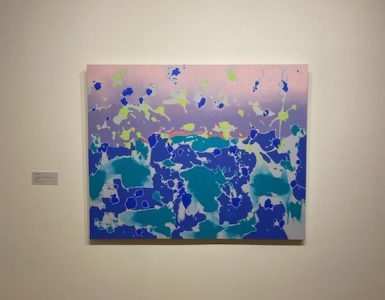

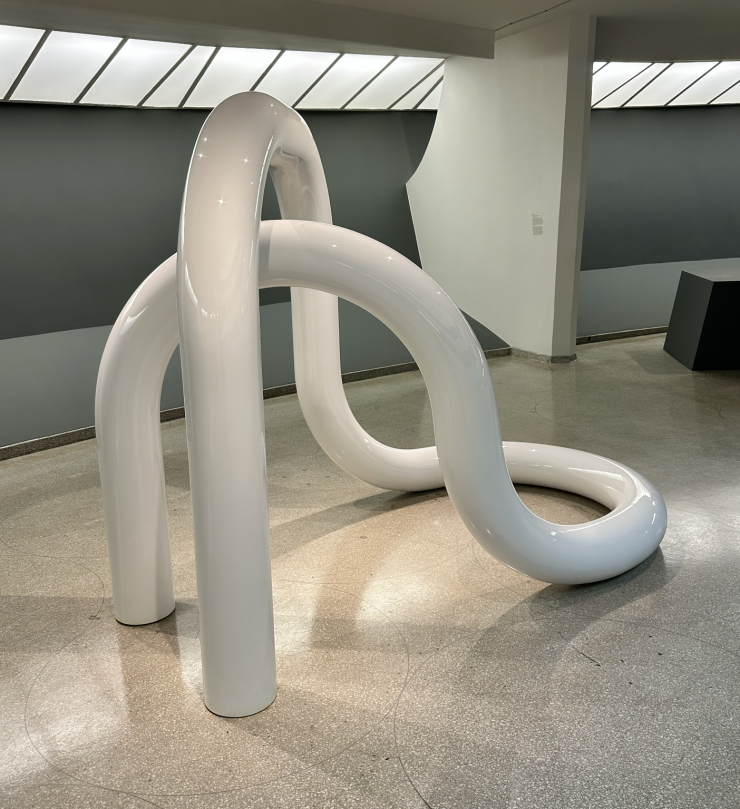

Visiting the Guggenheim Museum in New York is, of course, nothing new. This must have been my fourth time exploring an exhibition there. I happened to come across the exhibition announcement in a design and architecture newsletter, and what I love about being in New York is exactly that: you discover something one day and can experience it the next.
On the Upper East Side of Manhattan, right along Fifth Avenue and directly facing Central Park, the Solomon R. Guggenheim Museum stands as one of New York’s most distinctive architectural landmarks. Designed by Frank Lloyd Wright and completed in 1959, the building breaks away from the traditional museum model in almost every way. Rather than moving through a sequence of rectangular galleries, visitors enter a bright central atrium and follow a continuous spiral ramp that gently ascends along the perimeter. This upward movement defines the entire experience. The ramp creates a slow, uninterrupted flow, where art is encountered gradually rather than in isolated rooms. At the same time, the open rotunda allows you to constantly look across and down the space, catching glimpses of artworks from multiple angles and distances. It’s a museum that encourages movement, shifting perspectives, and a more fluid way of engaging with art.
The new temporary exhibition focused on Carol Bove, an American contemporary artist known for her sculptural work that explores material, form, and balance. Based in New York, with a studio in Brooklyn, she often works with industrial materials such as stainless steel, shaping and bending them into expressive, almost spontaneous-looking forms. Her sculptures challenge the perception of weight and stability, appearing both strong and delicate at the same time. Beyond her well-known steel works, Bove’s practice also includes installations, found objects, and works on paper.
This was my first time seeing Bove’s work in person. I was already familiar with her bent steel sculptures, but had been wanting to explore more of her work for a long time. Seeing her work up close, and discovering especially her older work, was very impressive. I’ve admired her balance between strength and softness and also really enjoyed being able to view her artworks from different angles and distances, discovering new compositions while moving up and down the rotunda.