
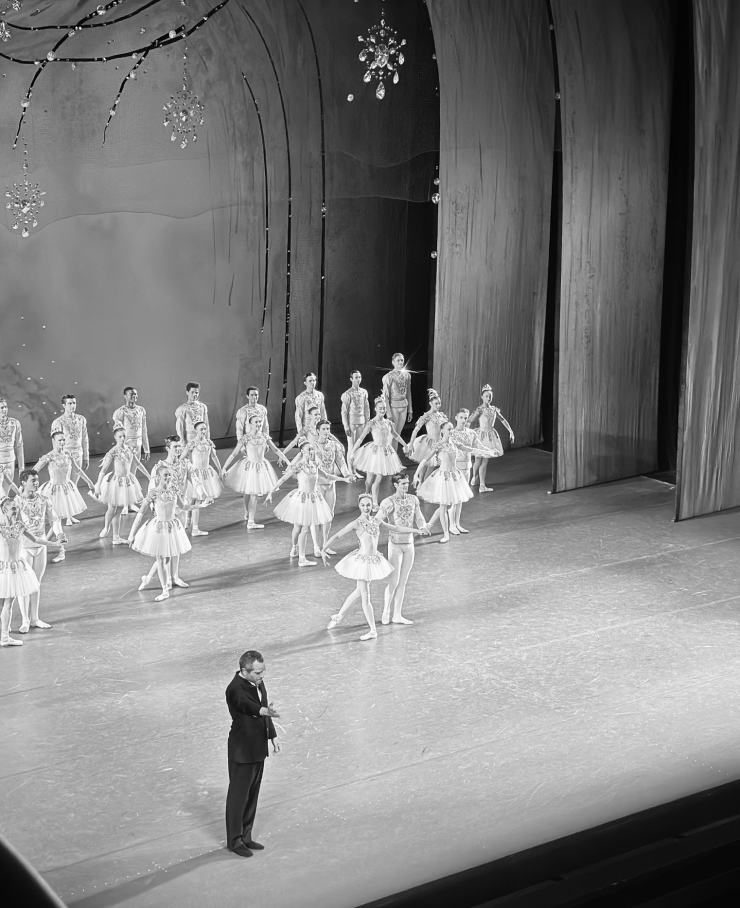

An evening at the David H. Koch Theater carries a particular kind of New York glamour: understated, sophisticated, and deeply tied to the city’s cultural identity. Situated within Lincoln Center for the Performing Arts, the theater remains one of Manhattan’s defining modernist landmarks. Designed by architect Philip Johnson and opened in 1964 as the New York State Theater, the building was conceived specifically for the New York City Ballet. Its sweeping staircases, expansive travertine surfaces, and glittering chandeliers evoke a quieter form of grandeur, one that complements rather than competes with the performances onstage.
The company’s “Innovators & Icons” program echoed that same balance of refinement and experimentation. The evening moved fluidly between works rooted in classical tradition and pieces that embraced a more contemporary vocabulary. Certain ballets felt lyrical and almost architectural in their precision, while others introduced sharper movements and unexpected rhythms that challenged conventional ideas of ballet. The contrast gave the program momentum and made each transition feel deliberate rather than nostalgic.
Founded in 1948 by choreographer George Balanchine and arts patron Lincoln Kirstein, the New York City Ballet emerged from an unusually ambitious and deeply influential partnership between two figures who reshaped the trajectory of American dance. Balanchine brought a radical choreographic vision shaped by his training in Imperial Russia and his belief that ballet could be distilled to its musical and structural essence. Kirstein, by contrast, provided the institutional drive and intellectual framework, advocating for a distinctly American ballet culture at a time when such an identity was still unformed. Together, they built not only a company but an artistic philosophy rooted in clarity, speed, and musicality, stripping away narrative excess in favor of form and movement. That sensibility still shapes the company today.
After the performance, the atmosphere spilled out into Lincoln Center’s glowing plaza, where audiences from the ballet, the opera, and neighboring performances merged into the night: gathering at the fountain, searching for taxis, and disappearing back into the movement and rhythm of the city.